
CBT Explained: Understanding the Connection Between Your Thoughts, Feelings and Behaviours
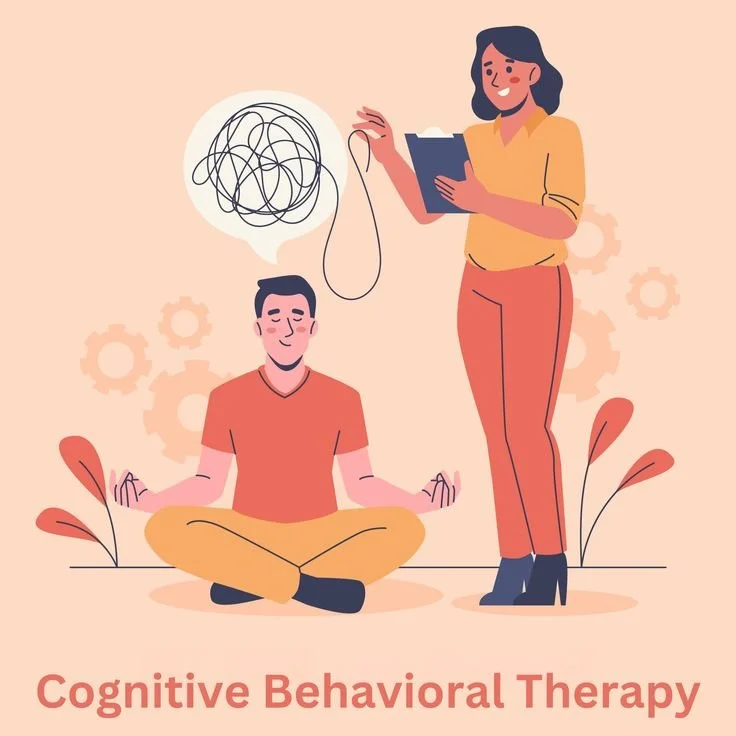
You can’t always control what happens, but you can learn to change how you respond.
Have you ever noticed how one small thought can change the way you feel or behave? Maybe you make a mistake at work and immediately think, “I’m not good enough,” leaving you feeling anxious and wanting to avoid the situation. Our thoughts, feelings and behaviours are closely connected, and sometimes these patterns can leave us feeling stuck or overwhelmed. Cognitive Behavioural Therapy (CBT) helps us understand these connections and recognise patterns that may be affecting our emotional wellbeing. By becoming more aware of the way we think and respond to situations, CBT can help us develop more balanced and helpful ways of managing everyday challenges.
What is Cognitive Behavioural Therapy?
Cognitive behavioural therapy or more commonly known as CBT a therapeutic practice that focuses around understanding our thoughts, feelings and behaviours and the relationship between them. CBT is based on a practical and goal focused approach using techniques such as behavioural experiments and cognitive restructuring to help change unhelpful thought patterns and develop new ways of responding to difficult situations.
The connection between thoughts, feelings and behaviours
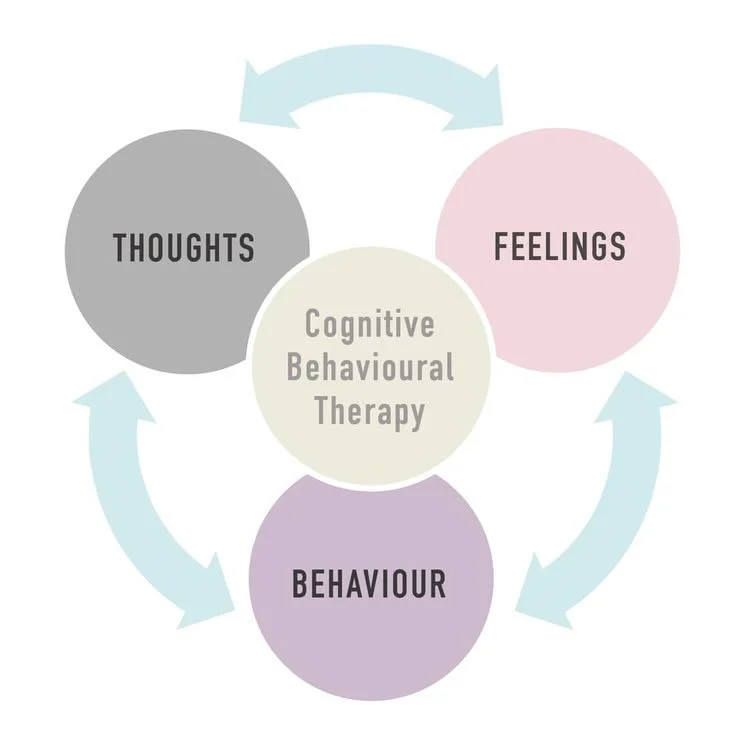
The idea is that we will have a thought such as “this exam is really hard I’m definitely going to fail”. This will lead to a feeling of anxiety, stress, worthlessness etc. Then to try and stop the uncomfortable feeling we will engage in a behaviour such as avoiding revising for the exam as it feels too overwhelming. The problem is this can create a cycle where avoiding can cause more unhelpful thoughts which lead to more uncomfortable feelings and so on. CBT aims to reframe these thoughts to help break this cycle. So rather than saying “I’m definitely going to fail” try and reframe the thought to “this exam is really challenging but I will try my best, my grades are not a reflection of my self worth”. This leads to less feelings of anxiety, stress and worthlessness, and less avoiding.
What are unhelpful thought patterns?
Our thoughts aren’t always helpful or accurate, particularly when feeling stressed or overwhelmed. Unhelpful thought patterns are biased and automatic ways of thinking that distort reality and worsen negative emotions. Some examples of unhelpful thought patterns are:
All or nothing thinking
This is when we use language such as "If I don't get an A+ im a failure”. It’s the idea that there is in between in a situation there is right or wrong, or success or failure.
Catastrophising
This is when we will think of the worst possible outcome in a situation and believe that it's now the only possible outcome and will happen. For example, if you think your boss has asked to speak to you, catastrophising would be thinking “I must have done something wrong and I’m going to get fired” even when there is no actual evidence to suggest this.
Mind reading
This is the idea that we think we know what other people think of us, usually negative again even when there is no reason to suggest they actually feel that way. For example, you may think your partner is upset at you and has doubts because they’re being more quiet than usual.
Overgeneralising
This is when we take a singular bad event and treat it as a true permanent rule that will happen each time. For example - “I keep getting turned down from jobs I will never get hired anywhere”
“Should” or “Must” Statements
Using language such as “I should always be productive” or “I must never make a mistake” These place unrealistic expectations that when not met can lead to feelings of failure, worthlessness or anxiety.
How can CBT help change these patterns?
CBT isn’t about simply “thinking positively” instead it can help you notice our automatic thoughts and question whether they’re accurate or helpful. CBT helps by providing a different perspective to a situation and developing a more balanced way of thinking and responding to these situations. It can help us identify patterns in our behaviours, and then try new behaviours and responses. The main way that CBT can help change these patterns is by something called cognitive restructuring. This is a process that allows us to not rely on our our emotions and feelings as fact, giving us time to pause, examine and shift towards a more realistic way of thinking rather than falling back into those unhelpful thought patterns.
Notice the trigger - what has caused you to feel anxious or experience an unhelpful thought
Record the thought - Write down the specific situation and the automatic negative thought attached to it.
Check the evidence - is there any real evidence that supports the thought, is there any evidence that contradicts it
Create an alternative - Build a new, more balanced thought based on the actual evidence rather than fear or assumption.
CBT and behaviours - why what we do matters
Our behaviours that we do to try and ease anxiety or uncomfortable feelings can actually maintain difficult emotions and unhelpful thought patterns. These are known as safety behaviours. Safety behaviours are behaviours we engage in to bring short term relief to the uncomfortable feeling we are experiencing, such as avoidance or repeated checking. However, engaging in these behaviours actually create much more long term harm as they reinforce that cognitive cycle as when the anxiety eventually returns the cycle will continue. Away you may combat this in CBT with your psychologist is something called a behavioural experiment. This is when you essentially do the opposite of what the thought/negative behaviour is telling you. For example you may be avoiding a big piece of coursework you have because it's far too overwhelming, the behaviour experiment may be to write your introduction and your first paragraph. Or maybe you get worried that when you leave the house you’ve forgotten your keys so you keep checking you have got your keys. The behavioural experiment may be that you must try to only check once when you leave and once when you get to your destination. These experiments aren’t meant to be extreme and are usually set as “homework” to go away and work on between sessions. You may be asked to record how you felt in the moment if your usual anxiety was there or subsided or even write why you struggled to complete it. The idea is the experiment will eventually be not engaging in your safety behaviour at all.
What can CBT help with?
CBT can help with a wide range of concerns such as:
Anxiety
Depression
Stress
Low self-esteem
Panic
OCD
Sleep difficulties
Difficulties managing emotions
What does CBT actually look like in therapy?
Every psychologist will use CBT techniques a bit differently and will cater them to the needs and goals of the client. For the most part they will include similar techniques such as:
Talking about situations that have been difficult
Identifying feelings
Looking for patterns
Learning practical strategies
Setting goals between sessions
Practicing new ways of responding
CBT isn’t about being told what to think or being given a list of things to do. The psychologist works collaboratively with you to understand what’s happening and find strategies that work for them.
Is CBT for everyone?
Everyone is different; some people may respond really well to CBT whereas others may feel as if they benefit from a less structured approach. It is a personal preference and your psychologist will help you figure out if CBT is an approach that could work for you or if another approach may be more appropriate based on your individual goals and needs.
How our team can help
Our psychologist can help understand your patterns and help you develop practical strategies that will improve your wellbeing and day to day life. If you think that CBT could be helpful for you, our psychologists can help you explore whether CBT is right for you either by booking an initial consultation or a 15 minute free phone call with our director Madonna.